
On October 13, 2026, Panama’s President signed Executive Decree No. 21, creating one of the most interesting new visa programs in Latin America. Here’s a complete guide to who qualifies, what it offers, and why Panama is worth a serious look as your next base.
On October 13, 2026, Panama’s President José Raúl Mulino signed Executive Decree No. 21, published in the Gaceta Oficial Digital No. 30634 B the following day. The decree creates a new immigration subcategory: the Working Holiday Visa (Visa de Corta Estancia en Calidad de Turista Participante del Programa Vacaciones y Trabajo).
The program allows citizens of countries with active bilateral agreements to live and work temporarily in Panama for up to 12 months. It is designed for young adults between 18 and 30, and it formalizes something that Panama’s immigration framework had never fully addressed: a legal, structured pathway for people who want to experience the country beyond a tourist visa while maintaining the ability to work during their stay.
The timing matters. Panama has quietly become one of the most practical bases in the Americas for location-independent professionals. Dollar economy. Territorial tax system. Direct flights to major U.S. and Canadian cities. High-speed internet. A capital city that functions at a level most visitors don’t expect. And a geographic diversity, Caribbean islands, Pacific coast, volcanic highlands, rainforest, that no other Central American country can match within such a small territory.
The Working Holiday Visa doesn’t create Panama’s appeal for digital nomads. It recognizes it, and gives it a legal framework for the first time.
Here’s everything you need to know.
What Is Panama’s Working Holiday Visa?
Panama’s Working Holiday Visa is a short-stay visa issued under the Non-Resident immigration category (Visa de Corta Estancia). It allows holders to enter Panama as tourist participants in the Working Holiday program. Meaning they can travel, explore the country, and engage in temporary work activities during their stay.
The visa was created specifically to promote cultural exchange and youth mobility through bilateral reciprocity agreements. Panama’s government framed the program explicitly around international exchange and mutual understanding between peoples. A cultural program with a work component, rather than a pure employment visa.
Key details from Executive Decree No. 21:
Duration: Up to 12 months. Non-renewable and improrrogable. Once the program period ends, holders must leave Panama.
Age requirement: 18 to 30 years old at the time of application.
Work authorization: Holders can engage in temporary work activities. Permanent employment is explicitly prohibited. Holders cannot apply for permanent residency while on this visa, and cannot change immigration category while in the country.
Work permit: A separate work permit issued by Panama’s Ministry of Labor and Workforce Development (MITRADEL) is required before engaging in any work activity.
Administration: Jointly administered by Panama’s National Immigration Service (SNM) and the Ministry of Foreign Affairs (MIRE).
Violations: Non-compliance with the decree results in visa cancellation and deportation to the country of origin.
The visa takes effect from the date of the decree’s promulgation. October 13, 2026.
Who Qualifies? The Bilateral Agreement Requirement
This is the most important question for prospective applicants and the one requiring the most careful attention.
The Working Holiday Visa is exclusively available to citizens of countries that have active bilateral agreements with Panama specifically for this program. General trade agreements, investment treaties, or diplomatic relationships do not confer eligibility. Each participating country must have a specific Working Holiday bilateral agreement in place with Panama before its citizens can apply.
As of October 2026, the confirmed situation is as follows:
Japan is the only country with a confirmed active bilateral agreement specifically for the Working Holiday program. Japanese citizens between 18 and 30 can apply under the existing memorandum of understanding between Japan and Panama, which served as the direct operational reference for the decree.
Australia is in advanced diplomatic negotiations with Panama to finalize a reciprocal Working Holiday agreement. The agreement has not yet been signed or promulgated. Australian citizens cannot apply until the bilateral agreement is formally concluded and published.
All other countries including those with free trade agreements, bilateral investment treaties, double taxation agreements, or existing diplomatic relationships with Panama do not automatically qualify. Panama maintains commercial and diplomatic relationships with the United States, Canada, Chile, Peru, Singapore, Israel, South Korea, Germany, France, Spain, the United Kingdom, the Netherlands, Mexico, and many others. None of these existing agreements confer Working Holiday eligibility unless a specific bilateral Working Holiday agreement is negotiated and signed separately.
Why is the list so short?
The program was structured under a quota-based negotiation model. Each participating country negotiates its quota individually with Panama’s MIRE and SNM. This means the list of eligible countries will grow over time as Panama formalizes additional bilateral agreements but growth happens country by country, not through blanket inclusion.
What this means in practice:
Before beginning any application process, prospective applicants must verify two things: first, that their country of origin has a signed and active Working Holiday agreement with Panama; and second, obtain a prior certification from Panama’s Ministry of Foreign Affairs (MIRE) confirming their country’s participation in the program and confirming available quota. This MIRE certification is a formal prerequisite for the SNM application, it cannot be skipped.
For the latest list of participating countries, check directly with Panama’s Ministry of Foreign Affairs or contact the SNM’s Special Projects Office.
The Application Process: Requirements and Documentation
Applications are submitted in person to the Special Projects Office (Oficina de Proyectos Especiales) of the National Immigration Service (SNM). The required documentation, as specified in Article 4 of Executive Decree No. 21, is as follows:
1. Personal application for the Working Holiday short-stay visa, submitted directly as a program participant.
2. Copy of passport, duly certified by a Panamanian notary public.
3. Three passport-sized photographs.
4. Birth certificate with apostille, confirming the applicant falls within the 18 to 30 age range at the time of application.
5. Certification issued by Panama’s Ministry of Foreign Affairs (MIRE) confirming the applicant’s country participates in the Working Holiday program and that quota is available.
6. Medical insurance covering the entire duration of the stay in Panama.
7. Proof of sufficient financial resources to cover living expenses during the stay.
8. Criminal background check from the country of origin, duly apostilled.
Processing times, fees, and any additional requirements not specified in the decree should be confirmed directly with the SNM’s Special Projects Office before submitting an application, as administrative procedures may evolve as the program becomes operational.
Why Panama? What Digital Nomads Actually Find Here
The Working Holiday Visa creates a legal framework for something Panama has been offering informally for years. But the more compelling question for most location-independent professionals is whether Panama actually delivers as a base.
The honest answer is that Panama consistently exceeds expectations and consistently surprises people who arrive having done only surface-level research.
The dollar economy
Panama has used the U.S. dollar as its legal currency since 1904. There is no exchange rate to manage, no currency conversion, and no exposure to local monetary devaluation for income earned in dollars or euros. For remote workers with dollar or euro-denominated income, this removes one of the most common sources of financial friction in international living. It also means that online banking, international transfers, and day-to-day transactions work exactly as they do in the United States, which is not a small thing for someone managing a business remotely.
The territorial tax system
Panama taxes only income generated within Panama. Income from foreign clients, international employers, or overseas businesses is not subject to Panamanian income tax. For digital nomads earning income from clients outside Panama, this creates a favorable fiscal baseline that deserves proper professional evaluation. Individual circumstances vary significantly, and qualified tax advice is essential, but the structural framework is more advantageous than most comparable countries in the region offer. For professional guidance on Panama’s territorial tax system, the Panama Ministry of Economy and Finance is the authoritative source.
The connectivity
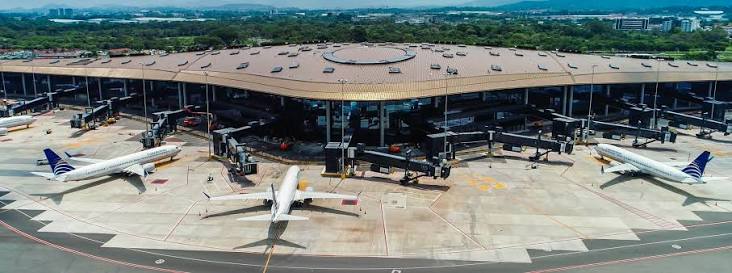
Tocumen International Airport connects Panama City to 88 destinations across 32 countries. Direct flights to Miami run under three hours. New York is approximately five hours. London is roughly ten. Toronto, Houston, Atlanta, Los Angeles, Bogotá, Mexico City, Lima, and most major Latin American and North American cities are served with direct or single-connection flights. For professionals who travel for client meetings or need to return home regularly, Panama’s connectivity is a genuine operational advantage rather than a pleasant bonus.
Internet quality in Panama City is among the best in Central America. Fiber optic coverage is extensive across the financial district, Casco Viejo, and major residential neighborhoods including San Francisco, Marbella, Obarrio, and El Cangrejo. Co-working spaces have grown significantly in recent years, with quality options across multiple price points and neighborhoods.
The cost of living
Panama is not the cheapest country in Latin America, and it doesn’t try to be. A comfortable lifestyle in Panama City, including housing in a well-connected neighborhood, food, transport, entertainment, and utilities, is significantly more affordable than comparable cities in North America or Western Europe, while offering a quality of infrastructure and services that many lower-cost alternatives in the region cannot match.
For context: the IMF projected Panama’s average consumer price inflation at approximately 1.4% for 2026. For remote workers comparing Panama to their home countries, where inflation has run substantially higher, the purchasing power dynamics are worth understanding properly.
Areas outside Panama City offer lower costs alongside extraordinary environments. Boquete in the Chiriquí highlands is home to a well-established international community, cool mountain temperatures, and the world’s most awarded coffee. Beach towns on the Pacific and Caribbean coasts provide lower costs and different lifestyle rhythms for professionals who can work from anywhere.
The infrastructure
Panama City functions at a level that surprises most first-time visitors expecting a small Central American capital. International-standard hospitals, including facilities with Johns Hopkins Medicine International affiliations, operate at a fraction of North American costs. A colonial quarter (Casco Viejo) that is a UNESCO World Heritage Site coexists with a financial district managing over $140 billion in banking assets and six restaurants ranked among Latin America’s top 100. The city has reliable utilities, modern residential infrastructure, and a service economy calibrated to international standards.
The geography
For professionals who value life outside of work, Panama’s geographic diversity within a small territory is unmatched in the region. The Caribbean coast is less than an hour by air from Panama City. The Chiriquí highlands; volcanic mountains, cloud forest, specialty coffee are 45 minutes away by plane. San Blas, the autonomous Guna territory with over 300 untouched Caribbean islands and no hotels, is accessible by private flight or catamaran. The Pearl Islands, a Pacific archipelago 70 kilometers south of the capital, offer whale watching, private beaches, and world-class marine biodiversity. The Panama Canal, one of the most extraordinary engineering achievements in human history, is 30 minutes from the city center.
For a Working Holiday visa holder with 12 months to explore, Panama provides more variety within a single country than most destinations can offer across an entire region.
Panama’s Digital Nomad Community: What Already Exists
Panama has attracted location-independent professionals informally for years, well before the Working Holiday Visa formalized any part of the framework.
The existing community is concentrated primarily in Panama City, with significant secondary populations in Boquete and to a lesser extent in Bocas del Toro and beach towns on the Pacific coast.
Several factors have made Panama a recurring choice for nomads evaluating Latin American bases over the past decade. The dollar economy eliminates a category of complexity that affects every other country in the region. The flight connections make it practical to maintain North American or European business relationships without long-haul travel. The Pensionado Visa program, Panama’s long-standing retirement residency option, has created a large established English-speaking expat community, which means the social and practical infrastructure for international residents is more developed than in countries with shorter expat histories.
Co-working spaces of note in Panama City include WeWork (multiple locations in the financial district), Regus, The Space, and several independent operators in Casco Viejo and San Francisco. Many cafés in Casco Viejo, including Sisu Coffee Studio and Café Unido, are functional working environments with strong WiFi and long operating hours.
Panama’s InterNations Expat Insider 2025 ranking placed the country 4th globally for expat quality of life, up from 22nd five years earlier, a trajectory that reflects a country whose infrastructure and international community have improved significantly over the past decade, and whose visibility as a destination has not yet caught up with its reality.
The Working Holiday Visa in Context: How Panama Compares
For eligible citizens (currently Japanese nationals and soon, likely, Australians), the Panama Working Holiday Visa sits within a global landscape of similar programs that have existed for decades.
Australia’s working holiday program, one of the world’s most established, allows young citizens of over 40 partner countries to work and travel for up to one or two years. New Zealand operates a similar program. The United Kingdom’s Youth Mobility Scheme covers applicants from approximately 14 countries. Canada’s International Experience Canada program serves citizens of 36 participating countries.
Panama’s program, in its current form, is more limited in scope, one confirmed partner country, with others in negotiation. But the structural framework created by Executive Decree No. 21 is designed for expansion. The decree explicitly references the principle of reciprocity and bilateral agreements as the operational mechanism, meaning that as Panama formalizes additional agreements, the program grows.
For professionals from countries not yet included: the United States, Canada, the United Kingdom, Germany, France, Spain, Australia, and others. The Working Holiday Visa is not yet accessible. However, Panama offers existing legal pathways for extended stays that are worth understanding. The standard tourist visa allows stays of up to 180 days for citizens of most countries. Panama’s Friendly Nations Visa offers residency for citizens of 50 specific countries. The Pensionado Visa provides permanent residency for retirees. Panama's Digital Nomad Visa, a separate program from the Working Holiday Visa, provides a more directly relevant option for remote workers who don’t meet the Working Holiday age requirement or whose country doesn’t yet have a bilateral agreement.
How Panama Luxury Experiences Coordinates Arrivals for Extended-Stay Visitors
Arriving in a new country for 12 months with a visa is the beginning, not the end, of the process.
The Working Holiday Visa resolves the legal question. It doesn’t resolve the practical ones: which neighborhood suits your lifestyle and work rhythm, which co-working environment is worth the membership, how to access the country’s best natural experiences on weekends without spending evenings coordinating logistics, and how to make the most of a year in Panama rather than simply existing within it.
At Panama Luxury Experiences, we design arrival experiences for discerning visitors who want to land in Panama and start living immediately rather than spend the first weeks navigating an unfamiliar city.
For Working Holiday visa holders and extended-stay visitors, our coordination includes:
Neighborhood orientation and accommodation selection. Panama City’s neighborhoods have distinct characters, the financial district for urban intensity, Casco Viejo for history and walkability, San Francisco or Marbella for a balance of both. We match accommodation to lifestyle, working pattern, and budget rather than defaulting to the most central option.
Co-working and workspace introductions. We connect extended-stay guests with the co-working communities that align with their professional context, whether that’s a high-spec corporate environment, a creative co-working space, or simply knowing which cafés work well for deep-focus hours.
Curated weekend experiences. The Canal from a private helicopter. A catamaran in San Blas. A private coffee estate visit in Boquete. A whale watching expedition in the Pearl Islands. These are not tourist activities for someone living in Panama for a year, they are the moments that define the experience. We coordinate them so that the week is for working and the weekend is for living.
Ongoing concierge support. Restaurant reservations at tables that don’t take public bookings. Private transfers for day trips. Medical referrals to the right specialists. Event access. The layer of local knowledge and relationships that makes an extended stay in a new country feel less like relocation and more like having someone who knows the city working alongside you.
One contact. Every detail. From your first question before arrival to whatever you need on your last day.
If you are planning a Working Holiday stay in Panama, or evaluating Panama as a base before committing, we coordinate the full experience.
📩 info@panamaluxuryexperience.com
panamaluxuryexperience.com
WhatsApp: +507 6927-8446
Frequently Asked Questions
Is the Panama Working Holiday Visa available to Americans?
Not yet. The United States does not currently have an active bilateral Working Holiday agreement with Panama. American citizens can enter Panama as tourists for up to 180 days without a visa. For longer stays, options include the Friendly Nations Visa, the Pensionado Visa for retirees, and Panama’s Digital Nomad Visa, which has different eligibility criteria from the Working Holiday program.
Can I work remotely on a Panama tourist visa?
This is a legal gray area that varies by country and individual circumstance. Technically, working remotely for foreign clients while on a tourist visa is not the same as working within Panama’s domestic economy, but the legality depends on your nationality, tax residence, and the nature of your work. The Working Holiday Visa and Digital Nomad Visa both provide clearer legal frameworks for remote work. Professional legal advice is recommended for extended stays.
What is the difference between Panama’s Working Holiday Visa and its Digital Nomad Visa?
Panama’s Digital Nomad Visa (separate from the Working Holiday program) is designed for remote workers of any age who earn income from foreign sources. The Working Holiday Visa is limited to ages 18-30, requires bilateral agreements with specific countries, and allows temporary local work in addition to remote work. Check with Panama’s SNM for current Digital Nomad Visa requirements.
How do I verify if my country has a Working Holiday agreement with Panama?
Contact Panama’s Ministry of Foreign Affairs directly, or contact your country’s Panamanian embassy or consulate. Do not assume eligibility based on general trade or diplomatic relationships, only specific Working Holiday bilateral agreements confer eligibility for this program.
Can I extend the Working Holiday Visa beyond 12 months?
No. The visa is explicitly non-renewable and improrrogable. Holders must leave Panama when the 12-month period expires. Re-entry under a different immigration category after departure may be possible depending on individual circumstances and applicable visa programs.
Do I need a separate work permit even if I work remotely?
Yes, if you intend to work within Panama (including for Panamanian employers or clients).
Article 6 of Executive Decree No. 21 requires a MITRADEL work permit for any local work activity. The specific requirements for remote workers earning income from foreign clients should be confirmed with an immigration attorney familiar with Panama’s current regulations.
What happens if I violate the terms of the Working Holiday Visa?
Article 8 of Executive Decree No. 21 states that non-compliance results in visa cancellation and deportation to the country of origin.
Is Panama safe for digital nomads?
Panama City is generally considered safe for international residents, with standard urban precautions applying as they would in any major city. The U.S. State Department rates Panama at Level 2 (exercise increased caution), the same rating as France, Germany, and the United Kingdom. The city’s established expat community, international-standard healthcare, and functional infrastructure make it a practical choice for extended stays.
What is the cost of living in Panama for a digital nomad?
Costs vary significantly by lifestyle and neighborhood. A comfortable month in Panama City, including a one-bedroom apartment in a well-located area, food, transport, entertainment, and utilities. Typically ranges from $1,500 to $3,000 USD depending on choices and lifestyle. Boquete and Pacific coast towns offer lower costs. For current cost of living data, Numbeo’s Panama City index is a useful reference point.
When will more countries be added to the Working Holiday program?
No official timeline has been announced. The program expands country by country through bilateral negotiation. Australia is the most advanced non-confirmed partner. For updates, monitor Panama’s Ministry of Foreign Affairs and National Immigration Service.
The Bottom Line
Panama’s Working Holiday Visa is new, currently limited in geographic scope, and still operationalizing its procedures. For the small number of people who qualify today, primarily Japanese citizens between 18 and 30, it offers a genuine 12-month legal framework to live, work, and explore one of the most underrated countries in the Americas.
For the larger group of professionals from countries not yet included, the program is worth watching. As Panama formalizes additional bilateral agreements, the Working Holiday Visa will become relevant to a much wider audience. The country’s underlying appeal, dollar economy, territorial tax system, international connectivity, extraordinary geographic diversity, and a capital city that consistently exceeds expectations doesn’t change based on visa category. Panama was already worth considering before October 13, 2026. The decree makes it more so.
Source: Executive Decree No. 21, Republic of Panama, October 13, 2026. Published in Gaceta Oficial Digital No. 30634 B, October 14, 2026. Country eligibility and application requirements should be verified directly with Panama’s Ministry of Foreign Affairs and National Immigration Service prior to initiating any application, as bilateral agreements and administrative procedures are subject to change.