Before you book, you probably want straight answers: what you need to enter, what the official advisories say, and what the first hours on the ground look like. Here they are.
Searches for “are Americans welcome in Panama” keep showing up next to questions about safety, entry rules and travel advisories. That tells us something about how people plan trips right now: they want to know the practical picture before they commit to flights and hotels.
This article is written to answer that question with facts rather than opinion. It covers what Americans need to enter the country, what the official advisories say, how arrival at Tocumen International Airport works, and what everyday life as a visitor looks like, from paying with dollars to finding English at a restaurant.
A note on how to use it. Entry rules and advisory levels can change. We link to the official source for every requirement so you can confirm the current version before you travel, and we show the date this article was last reviewed at the end. If you are planning a trip within days, check those sources first and use this article to understand what you are reading.
The Short Answer
Yes. Panama welcomes American travelers, and the practical picture is straightforward.
American citizens do not need a visa for tourism and can stay up to 180 days. Panama uses the U.S. dollar as its currency, so there is no exchange rate and no currency to buy before you land. Copa Airlines and several U.S. carriers fly direct from major American cities, with Miami about three hours away. English is widely understood in Panama City’s tourism and business districts, in Casco Viejo and in the main tourist destinations.
The requirements are simple, but they are real. Border officers can ask for proof of onward travel and proof of funds, and travelers who arrive without them can be delayed. Knowing this in advance makes the arrival uneventful.
What Do Official Travel Advisories Say?
Travel advisories are the most common thing people check, and the most commonly misread.
The U.S. State Department uses a four-level system. At the time of writing, Panama is rated Level 2, exercise increased caution. That is the same level the Department applies to many popular European destinations, including France, Germany and the United Kingdom. It is not a warning against travel. It is a signal to apply the usual awareness you would use in any large city.
Advisories usually describe specific areas rather than the whole country. Panama’s advisory language has historically pointed to certain neighborhoods in Colón and parts of Panama City, and to the border region with Colombia in Darién, where independent travel is discouraged. These are not the areas most visitors use. The neighborhoods, islands and highlands covered in our other guides sit in a different category.
The Government of Canada and the UK’s Foreign, Commonwealth and Development Office publish their own advice. Reading all three gives you a more balanced picture than any single one, because each country words risk differently.
Three habits make advisories useful:
- Check the date. Advisories are reissued periodically. A reading from last year is not a reading from today.
- Read the area descriptions, not just the level. The level is a headline. The detail tells you where it applies.
- Compare with your own itinerary. If your plans are in Panama City’s financial district, Casco Viejo, the Pearl Islands or Boquete, ask whether the cautions apply to those places.
For a fuller treatment, see our guide on whether Panama is safe for luxury travelers.
Entry Requirements for American Citizens
These are the requirements as commonly published at the time of writing. Confirm the current version with the Servicio Nacional de Migración and the State Department’s country page before you travel.
Passport
American citizens need a valid U.S. passport. Panama requires a minimum validity period beyond your entry date, and the exact figure is stated in the official requirements. As a general habit, renew a passport that is within six months of expiring before an international trip, because airlines can also apply their own rules at check-in.
Proof of Onward Travel
Panama can ask to see a ticket showing you will leave the country. This can be a return flight to the United States or a flight to another destination. Airlines flying to Panama also check this at departure, so having it ready at check-in avoids problems before you leave home.
Proof of Sufficient Funds
Immigration can ask for proof that you can support your stay. This is commonly satisfied with a credit card or a modest amount of cash. It is rarely requested in practice for visitors with a hotel booking and a return ticket, but it is a published requirement, and carrying a card or a bank statement on your phone removes any doubt.
Health and Vaccines
Panama has historically required a yellow fever vaccination certificate from travelers arriving from certain countries, and recommends it for some travelers visiting specific regions. Most Americans flying directly from the United States are not in the group that must show it. The CDC’s Travelers’ Health page for Panama lists current recommendations by region and activity. If you plan to visit Darién, Bocas del Toro or San Blas, read it before you go and speak with your doctor.
Tap water is considered safe in Panama City. Outside the capital, many travelers choose filtered or bottled water.
Customs
Panama restricts certain items, particularly fresh fruit, plants, meat and dairy products, and has rules on cash declarations above a set amount. The Autoridad Nacional de Aduanas publishes the current list. If you are unsure about something you plan to carry, such as medication, drones or professional camera equipment, check it before you pack.
What Arrival at Tocumen Looks Like
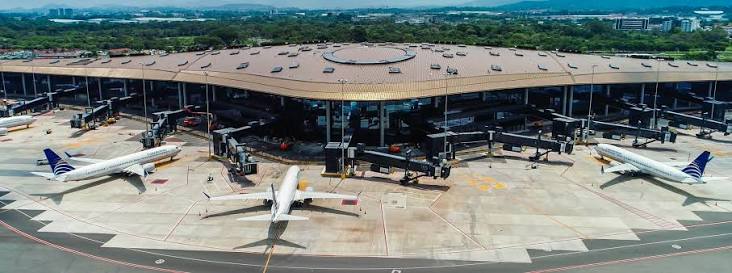
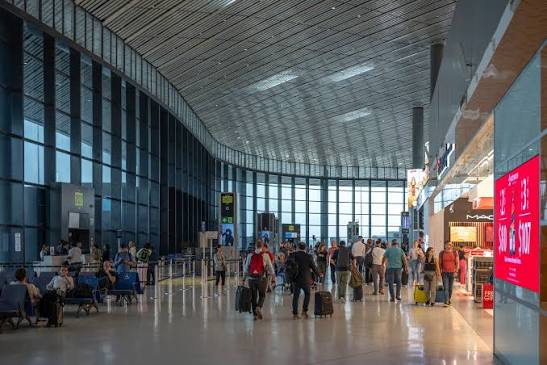
Tocumen International Airport is the Hub of the Americas, and arrival is generally orderly. Here is the sequence most American travelers experience.
1. Immigration. You show your passport, and the officer may ask the purpose of your trip, where you will stay and how long. A clear answer, with a hotel name and a return date, is usually all it takes. Immigration lines can be longer when several international flights arrive close together.
2. Baggage. Bags are delivered in the main hall. Allow time for this on busy banks.
3. Customs. After baggage you pass through customs. Declare anything required.
4. Arrivals. Outside customs you will find taxis, ride services and private transfers. Tocumen is roughly 25 to 40 minutes from Panama City’s main areas, depending on traffic and time of day.
A useful planning tip: avoid scheduling anything important in the first hours after landing. Between immigration, baggage and traffic into the city, it is realistic to be at your hotel one and a half to two hours after touchdown.
Money, Phones and Everyday Practicalities
Currency. Panama has used the U.S. dollar as its legal currency since 1904. The Panamanian balboa exists only as coins, which circulate alongside U.S. coins at the same value. You will not need to exchange money.
Cash or card. Cards are widely accepted in hotels, restaurants and shops in Panama City and in tourist destinations. Carry some cash in small bills for taxis, markets, tips, and smaller businesses, and for places such as San Blas, where card payment is limited. Large bills can be hard to change, so smaller denominations are more practical.
Phones. Roaming depends on your carrier and plan. Many travelers use an eSIM or a local SIM for data. Check your plan before you leave.
Power. Panama uses the same plugs and voltage as the United States, so your chargers work without adapters.
Language. Spanish is the official language. English is widely understood in Panama City’s financial district, Casco Viejo and tourist areas, and much less so outside them. A few phrases go a long way and are appreciated.
Time. Panama is on Eastern Standard Time all year and does not observe daylight saving time. That means it matches New York in winter and is one hour behind during U.S. daylight time.
Tipping. A service charge is not always included in restaurant bills, and a tip of around 10 percent is common when it is not.
What to Expect on the Ground
Visitors from the United States tend to describe the same things. Service in hotels and restaurants is warm and attentive. Conversation is friendly, and Panamanians are generally curious about where you are from and what you have seen. The country has deep historical ties with the United States through the Canal, and American visitors are a familiar presence in the capital.
Practically, you will find a city that functions at a high level: modern infrastructure, international restaurants, reliable services in the main districts and a sophisticated food scene. Beyond the capital, the pace slows, Spanish becomes more important and planning matters more, especially for islands and highlands where transport and services are limited.
The most useful mindset is the one you would bring to any international city. Use ordinary awareness, keep valuables out of sight, use licensed transport and ask your hotel which areas to avoid at night.
Staying Informed and Prepared
A few small steps make a trip more resilient.
- Enroll in the Smart Traveler Enrollment Program (STEP). It is free, and it lets the U.S. embassy contact you in an emergency and send you updates.
- Carry copies of your passport. Keep a photo on your phone and a printed copy separate from the original.
- Buy travel insurance. Look for medical coverage, medical evacuation, trip cancellation and coverage for the activities you plan, such as boat charters, diving or helicopter flights.
- Know the emergency number. In Panama, the general emergency number is 911.
- Save your embassy details. The U.S. Embassy in Panama City publishes its contact information on its website.
Staying Longer Than 180 Days
The 180-day allowance covers the needs of most visitors. If you are considering a stay beyond that, or a more permanent base, those arrangements involve legal and immigration processes outside the scope of this guide, and you should seek professional advice. For tourism, the standard entry covers a long winter stay without any additional paperwork.
How Panama Luxury Experiences Coordinates American Arrivals
Most of what makes entry stressful is not the requirements. It is the uncertainty about what happens in the first hours.
At Panama Luxury Experiences, we plan the arrival before you leave home. Before your trip, we share a short checklist of the documents to carry and what to expect at immigration. On the day, a private driver meets you at Tocumen, briefed on your flight and your hotel. You are taken straight to your accommodation, with check-in coordinated in advance and your first evening already planned if you want it to be.
From there, we design the visit around you: the Canal from a helicopter, a reserved table at a restaurant that does not take public bookings, a private yacht day in the Pearl Islands, a catamaran in San Blas, a coffee estate in Boquete. One contact manages every detail, from your first message to your last transfer.
Planning a Panama visit from the U.S.? We coordinate every detail from the moment you land.
📩 info@panamaluxuryexperience.com
panamaluxuryexperience.com
WhatsApp: +507 6927-8446
Frequently Asked Questions
Are Americans welcome in Panama?
Yes. American citizens can enter Panama for tourism without a visa and stay up to 180 days. Panama uses the U.S. dollar, has direct flights from major U.S. cities and is used to receiving visitors from the United States. Entry requirements are published on the Servicio Nacional de Migración website.
Do Americans need a visa to visit Panama?
No, not for tourism. A valid U.S. passport is required. Confirm the current rules with Panama’s immigration authority before travel.
How long can Americans stay in Panama?
Up to 180 days per entry as a tourist. This is long enough to cover most winter stays.
Do I need a return ticket to enter Panama?
Panama can ask for proof of onward travel, and airlines also check it at departure. Carry a return or onward ticket.
Do I need to show proof of funds?
It is a published requirement and immigration can ask for it. A credit card or a bank statement on your phone is generally enough for most visitors. Confirm the current requirement before you go.
Is Panama safe for Americans right now?
The U.S. State Department rates Panama at Level 2 at the time of writing, the same level as several popular European destinations. Standard urban precautions apply. Read the full advisory and check the date, and see our guide to safety in Panama.
Do Americans need a yellow fever vaccine for Panama?
Panama has required it from travelers arriving from certain countries and recommends it for some regions. Most travelers flying directly from the U.S. are not required to show it. Check the CDC’s Panama page and speak with your doctor, especially if you plan to visit Darién, Bocas del Toro or San Blas.
Can I use U.S. dollars in Panama?
Yes. The U.S. dollar is the legal currency. You do not need to exchange money. Panamanian balboa coins circulate at the same value as U.S. coins.
Do I need to speak Spanish?
Not in Panama City’s main districts or in tourist destinations, where English is widely understood. Outside those areas Spanish becomes more important.
What is the best time for Americans to visit Panama?
December through April is the dry season and lines up with the American winter. July to October adds humpback whale season. See our month-by-month breakdown.
How does Panama compare with Costa Rica for American travelers?
Panama uses the dollar, has a major international hub in Tocumen and offers a very different mix of experiences, from the Canal to two coastlines. Costa Rica uses the colón. Our comparison of Panama, Costa Rica and Belize covers beaches, stays, dining and costs.
Sources: U.S. State Department, Panama Travel Advisory. Government of Canada, Panama. UK FCDO, Panama Travel Advice. Servicio Nacional de Migración de Panamá. CDC Travelers’ Health, Panama. Autoridad Nacional de Aduanas. Smart Traveler Enrollment Program. Tocumen International Airport. Copa Airlines.
Entry requirements and advisory levels change. Confirm them with the official sources above before you travel.